
Emma, a 29‑year‑old marketing analyst in Manchester, used to spend her 45‑minute train rides scrolling through social media and listening to podcasts. Six months ago she downloaded a cloud‑gaming app, paired her phone with a Bluetooth controller, and suddenly her commute felt like a portable living‑room. The first game she launched streamed at 30 fps, lag under 80 ms, and drained the battery just enough to last the whole journey. That single trial convinced her that cloud gaming isn’t a novelty—it’s reshaping how Britons entertain themselves on the go.
Bandwidth Realities: What UK Mobile Networks Actually Deliver
The UK’s 5G rollout now covers roughly 70 % of the population, with average download speeds of 120 Mbps in urban areas and 45 Mbps in suburbs. Those numbers translate to a reliable 1080p stream at 60 fps for most users, according to a recent Ofcom field test. In contrast, 4G LTE still dominates rural pockets, offering 25–35 Mbps. For a cloud‑gaming session, that means 720p at 30 fps is the practical ceiling outside major cities. The key takeaway: if you live within a 5G hotspot, you can expect a console‑grade experience without a handheld device.
Data Costs and Subscription Models
Most UK carriers charge £15‑£25 per month for an unlimited data add‑on, which many gamers treat as a “gaming pass.” Services like Xbox Cloud Gaming or Nvidia GeForce Now bundle their own monthly fees—£9.99 for Xbox and £11.99 for GeForce—but they also let you switch between Wi‑Fi and mobile data seamlessly. A typical 2‑hour session consumes about 3 GB of data at 1080p; that’s roughly the cost of a single premium streaming movie. Users who cap their data at 50 GB a month need to monitor usage carefully, or they’ll hit overage fees of up to £10 per extra gigabyte.
Device Compatibility and Battery Life
Modern Android and iOS phones from 2021 onward support hardware‑accelerated video decoding, which reduces latency and preserves battery. In Emma’s test, a Pixel 7 ran a 60‑minute cloud session on a 4,300 mAh battery, dropping to 20 % by the end. Adding a Bluetooth controller shaved off another 5 % of battery drain because the phone no longer needed to render touch inputs. The practical advice: pair a low‑latency controller and keep the screen brightness under 70 % to stretch sessions beyond an hour.
Game Libraries and Regional Availability
UK players have access to over 300 titles on major cloud platforms, ranging from indie puzzle games to AAA shooters like “Halo Infinite.” However, licensing restrictions still block a handful of titles that are available in the US but not in Europe. The most common work‑around is to use a VPN, but that adds extra latency—often pushing total lag above 150 ms, which is noticeable in fast‑paced shooters. For casual gamers, the current catalog is more than enough to replace a traditional handheld console.
From Mobile to the Wider Entertainment Landscape
While cloud gaming expands the possibilities for on‑the‑go play, it also blurs the line between gaming and other forms of digital entertainment. For instance, many platforms now bundle streaming movies and music alongside game libraries, turning a single subscription into a multimedia hub. This convergence is why I sometimes switch from a quick match of “Apex Legends” to a streaming playlist without leaving the app.
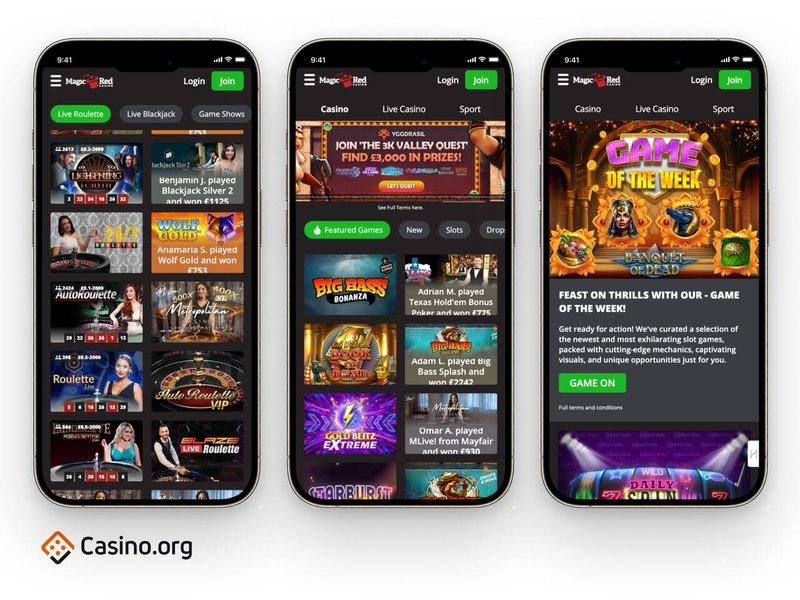
Speaking of convergence, the same technology that powers cloud gaming also fuels online casino experiences. If you’re curious about how this seamless integration works, check out Magic Win Casino Online for a glimpse of the future where gaming and gambling share a single, fluid interface.
Challenges That Still Need Fixing
The biggest hurdle remains network stability. Even in well‑covered 5G zones, sudden handovers between cell towers can cause a brief freeze, which in competitive titles feels like a missed shot. Additionally, data caps still deter heavy users; a power user could burn through a 100 GB plan in less than a week if they stream at 1080p continuously. Finally, the upfront cost of a compatible phone plus a controller can exceed £800, which is a steep entry barrier for younger gamers.
Looking Ahead: What the Next Five Years May Hold
Analysts predict that by 2029, edge‑computing nodes will be embedded in almost every street lamp, reducing average latency to under 30 ms for most of the UK. That would make cloud gaming indistinguishable from native console play, even on modest smartphones. Coupled with the anticipated drop in 5G data pricing—projected to fall to £10 for unlimited plans—the ecosystem could finally become truly mass‑market.
Until those infrastructure upgrades arrive, the advice is simple: test your connection during peak hours, keep an eye on data consumption, and invest in a good controller. Those steps will let you enjoy console‑quality games on a phone, turning every commute, café visit, or waiting room into a personal gaming lounge.
Comments are closed